
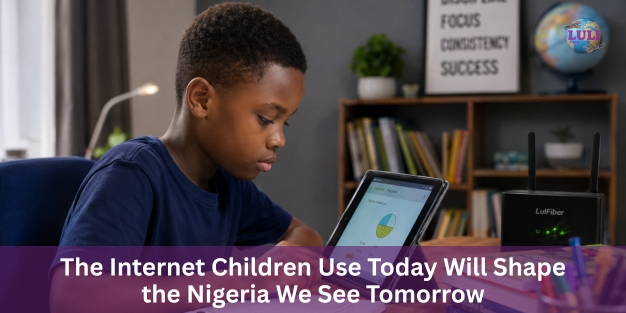
The Internet Children Use Today Will Shape the Nigeria We See Tomorrow
A child sitting with a tablet today may become the doctor who saves lives tomorrow.
The teenager learning coding online could become the engineer who transforms Nigerian industries in the future.
The little girl attending virtual classes with stable internet might one day lead innovations that reshape communities across Africa.
That is why the internet children use today matters more than many people realize.
As Nigeria celebrates Children’s Day, it is important to look beyond gifts, school performances, and colorful celebrations. We must also think about the digital environment children are growing up in, because the internet has quietly become one of the biggest influences shaping their future.
Children are learning, communicating, creating, and discovering the world online. The quality of that experience will directly affect the kind of Nigeria we see tomorrow.
The Internet Has Become Part of Childhood
Childhood today looks very different from what it was years ago.
Children now grow up in a world where:
- Homework is researched online
- Skills are learned through videos
- Classrooms extend into digital spaces
- Friendships happen across screens
- Creativity is shared through technology
For many families, the internet is no longer optional. It has become part of daily life.
According to UNICEF digital learning reports, millions of children globally now depend on online platforms for education, communication, and skills development.
This means the internet is no longer just entertainment. It is becoming a foundation for learning and opportunity.
The Kind of Internet Children Experience Matters
Not all internet experiences shape children the same way.
A child constantly dealing with slow connectivity may struggle to stay engaged during online learning. Educational videos stop loading, research becomes frustrating, and opportunities become limited.
On the other hand, reliable internet opens doors.
It allows children to:
- Learn digital skills early
- Access global educational resources
- Join virtual competitions and communities
- Discover talents and passions
- Build confidence using technology responsibly
This is why internet quality matters in homes and schools.
Reliable providers such as Lulifiber are increasingly becoming part of conversations around stable connectivity for modern families, especially as digital learning continues to grow across Nigeria.
Raising Smart Children in a Digital World
Technology itself is not the problem. The real challenge is how children are guided while using it.
Children need more than internet access. They need digital direction.
Parents and guardians can help in several important ways:
1. Setting Healthy Boundaries
Children need structure when it comes to internet use. It’s not about stopping them from using devices but about helping them balance things properly. Setting limits on screen time and making sure they still have time for play, rest, studies, and family interaction helps them grow in a healthier way, both mentally and physically.
2. Encouraging Educational Content
The internet isn’t just for entertainment. In fact, it can be a powerful learning tool when used well. Parents can guide children toward content that teaches them new skills, supports their schoolwork, or helps them explore useful interests. When used wisely, screen time becomes an opportunity for growth instead of distraction.
3. Teaching Online Safety
Children should be helped to understand that not everything online is safe or trustworthy. They need to learn simple but important lessons like protecting personal information, being careful with strangers online, avoiding harmful content, and speaking up when something feels wrong. These habits go a long way in keeping them safe.
4. Leading by Example
Children often learn more from what they see than what they are told. If adults constantly spend time on their phones without balance, children will likely do the same. But when parents show healthy digital habits, like putting devices away during family time or using the internet with purpose children naturally follow that example.
According to UNESCO studies on digital learning, children tend to learn better and behave more responsibly online when they are guided and supported by adults.
Digital Skills Will Shape Nigeria’s Future Workforce
The future job market will heavily depend on digital skills.
Many careers’ children will pursue tomorrow may not even fully exist today.
Fields like:
- Artificial intelligence
- Software development
- Cybersecurity
- Data analysis
- Digital marketing
- Robotics
- Remote collaboration
will continue to grow rapidly.
Children exposed to technology responsibly today are more likely to adapt confidently tomorrow.
Nigeria’s future economy may depend largely on how prepared today’s children become in a digital world.
Why Stable Internet Is Becoming a Family Need
In many homes, several devices now depend on one internet connection at the same time.
Parents may be working remotely while children attend online classes or watch educational videos.
When the network becomes unstable, frustration affects everyone.
This is why many families are now prioritizing:
- Stable internet speed
- Reliable connectivity
- Better coverage
- Safer online experiences
As internet usage grows in homes, dependable fiber connectivity is becoming less of a luxury and more of a modern household necessity.
Children’s Day Is Also a Reminder About Digital Responsibility
Children’s Day is not only about celebrating children for one day. It is also about preparing a better environment for their future.
That environment now includes the digital world.
The internet can educate or distract. It can empower or mislead. It can inspire creativity or expose children to unhealthy influences.
The difference often comes down to guidance, awareness, and the quality of digital access children receive.
If we want a smarter, safer, and more innovative Nigeria tomorrow, then we must pay attention to the digital experiences shaping children today.
The internet children grow up with today will quietly shape the kind of adults they become tomorrow.
It will influence how they learn, think, solve problems, and connect with the world.
As Nigeria celebrates Children’s Day, this is a reminder that building a better future is no longer only about roads, buildings, or policies. It is also about digital access, safe connectivity, and the opportunities children can reach through technology.
A stronger digital future begins with giving children the right environment to learn, explore, and grow responsibly.
And sometimes, that future begins with something as simple as a stable internet connection at home.
This Children’s Day, let’s think beyond celebration and focus on the future we are helping children build every single day.
How do you think the internet is shaping children in Nigeria today, positively or negatively?
Share your thoughts, experiences, and ideas in the comments. Conversations like this help create awareness for safer and smarter digital growth for the next generation.

Honestly this is exactly what i was looking for and I really appreciate it.
Absolutely! This is very interesting.